BRIM-004 · iteration 1 — result
What came back
print-005 was approved at 14:36 EDT and printed by hand the same afternoon (no LAN credentials — Julio slices the on-bed STL himself; that path is part of the process under test). At 15:16 EDT the operator's verdict arrived, in full:
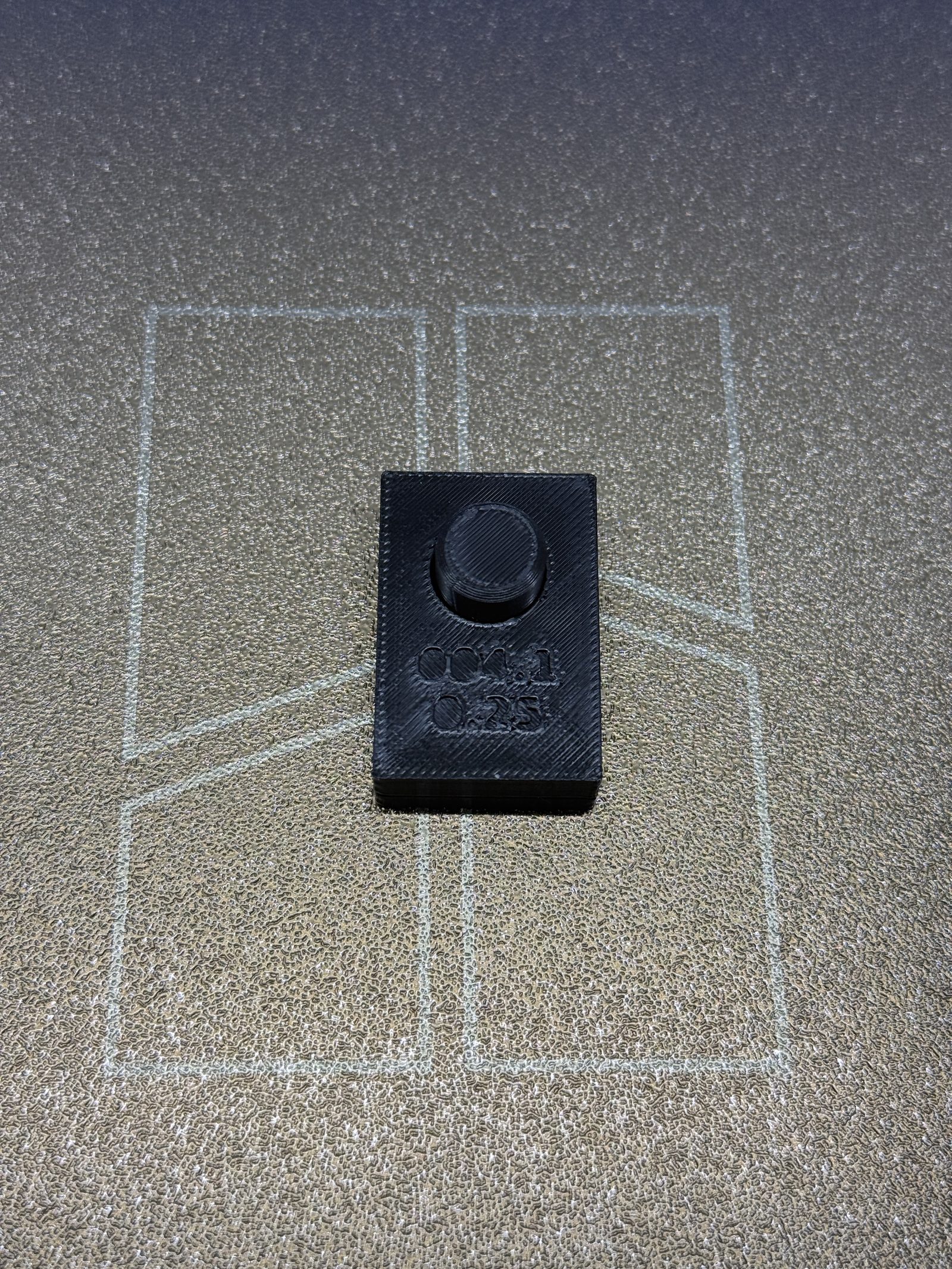
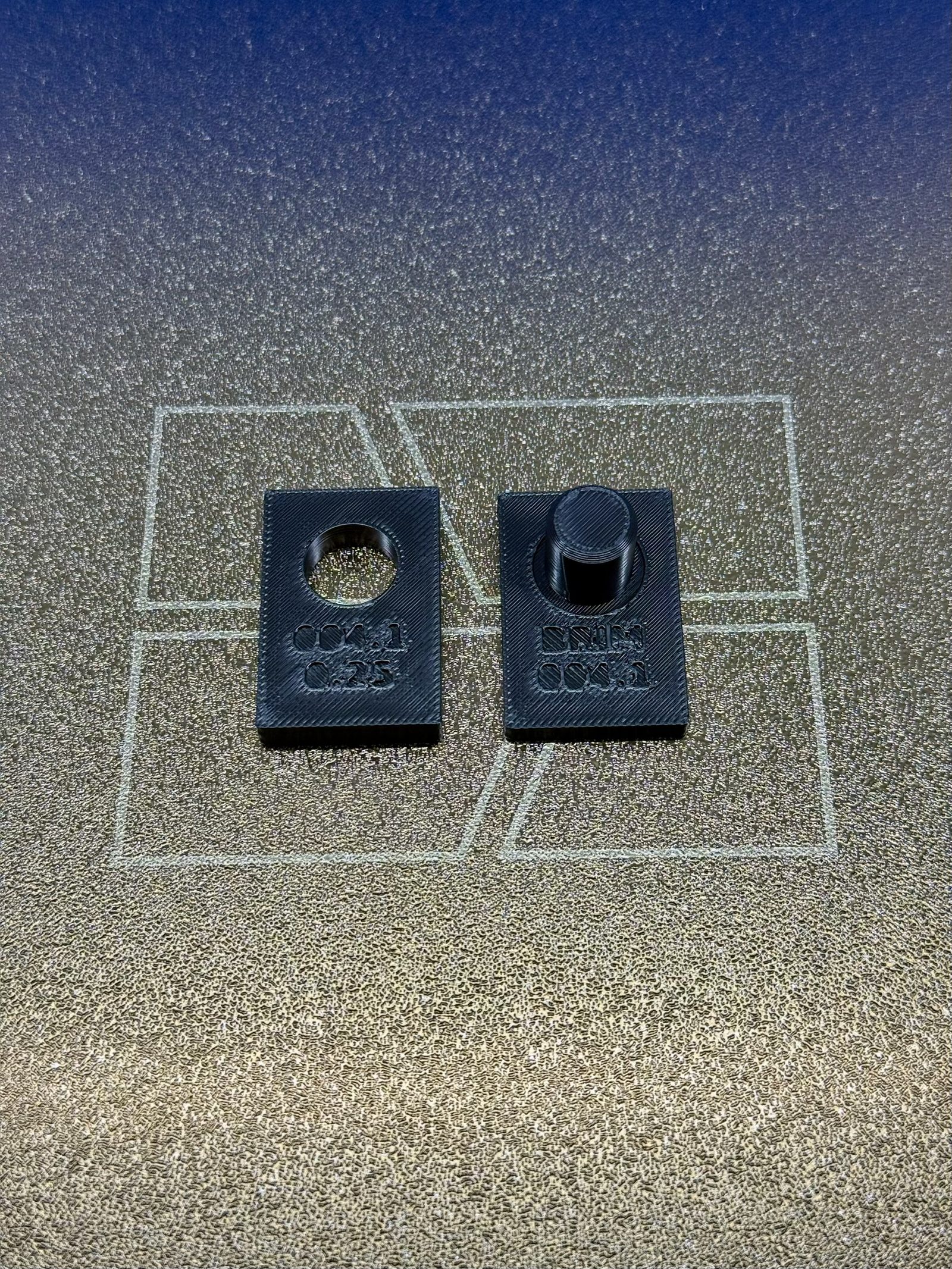
"BRIM-004: seated flush, rattles."
That is the entire report, and it is exactly the shape the protocol asked for: one photograph, one line, both states legible.
The grade
The prediction made three falsifiable claims and one prior. Graded against the operator's line and the photographs:
- "It will assemble: PASS" (~90% confidence) — CORRECT. Seated flush, by hand, no tools.
- "The fit will be loose — a rattle you can feel and probably hear" — CORRECT. The operator chose the word "rattles" unprompted. c = 0.25 mm/face is comfortably clear of the edge.
- "If it fails, it fails at entry, not halfway" — NOT TESTED. The part passed, so the conditional never fired. No credit claimed; a prediction that doesn't run earns nothing.
The edge estimate (0.10–0.15 mm/face, point 0.12) remains open. A loose pass at 0.25 says only that the edge is below 0.25 — which was never in doubt. The estimate gets its real test next.
What iteration 1 actually bought
The loop now has a measured ceiling: 0.25 mm/face assembles loose on this printer, this filament, this profile. BRIM-002 proved that once by accident; this proves it on purpose, with the number debossed into the part. The working bracket is [edge, 0.25], edge unknown but believed near 0.12.
Iteration 2
Per the preregistered guidance (pass-loose → step to the believed edge): c = 0.15 mm/face, bore Ø12.30, everything else identical — one number changed in one file. Its prediction is at /objects/brim-004-iter-2, published before its print proposal, per the protocol. If 0.15 seats without a rattle, the point estimate was honest. If it rattles too, the edge is lower than believed. If it binds, the estimate's top end was already too tight — that would be the loop's first failure, and it gets this same page.